First Exhibition Room (The History of Printing)
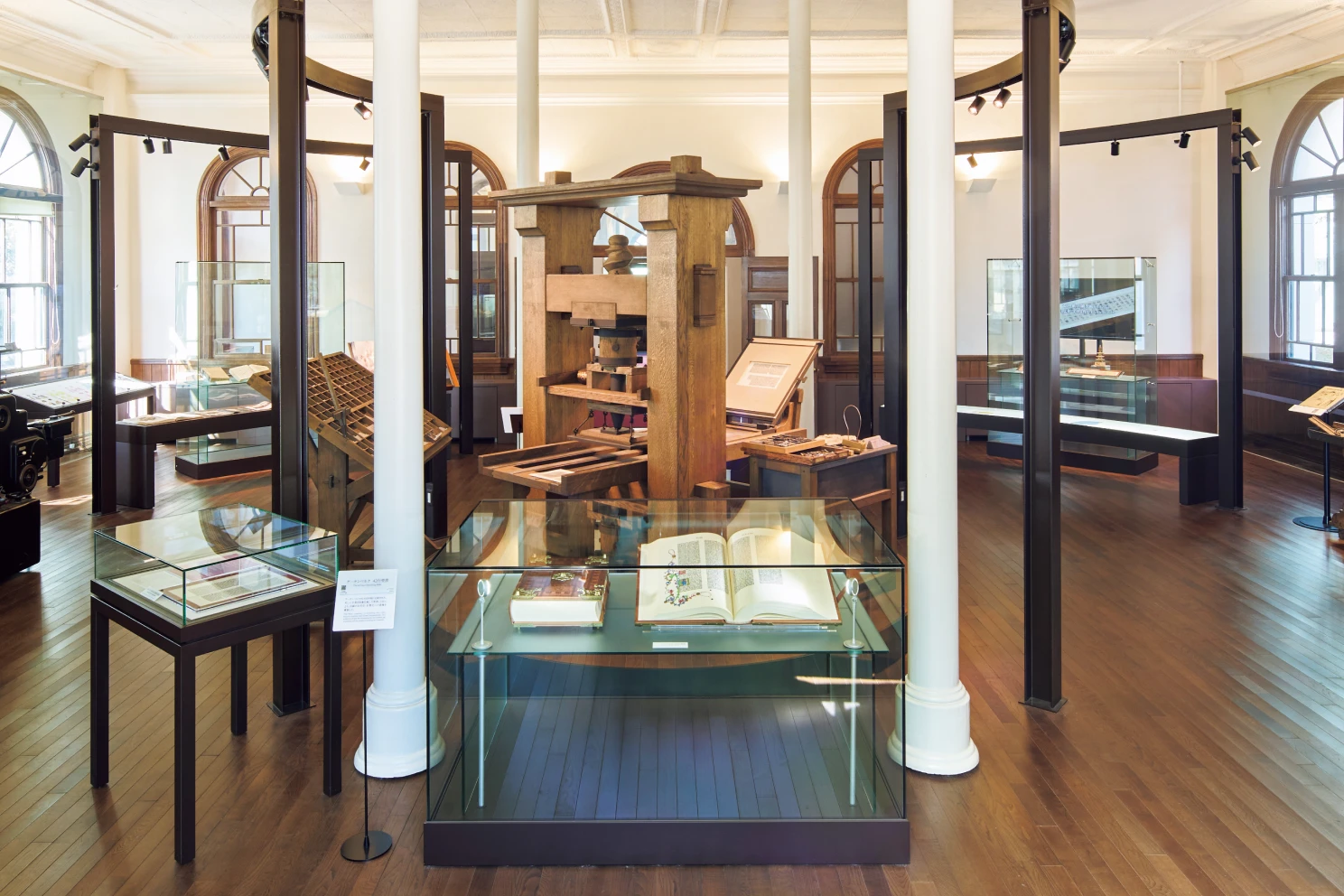
The First Exhibition Room introduces the history of printing from its beginnings to the modern era.
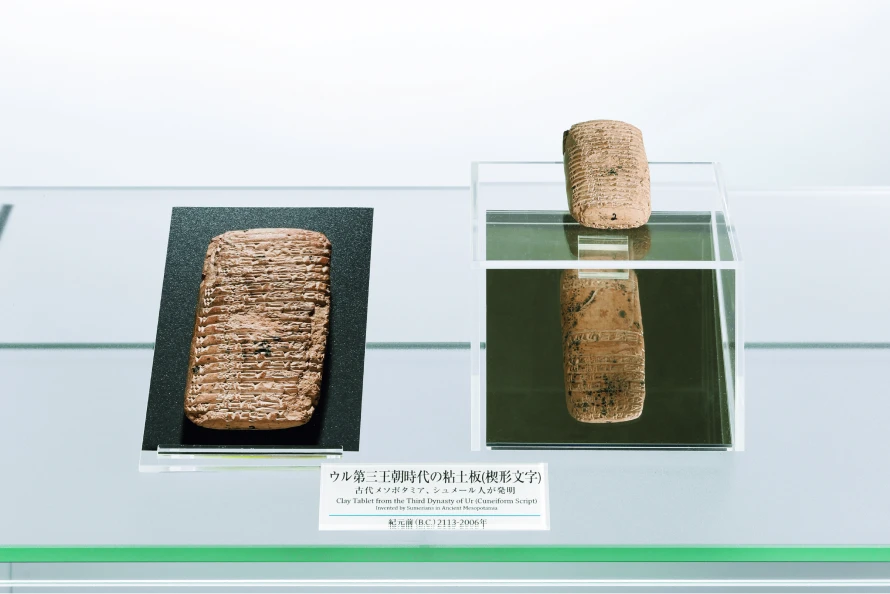
Clay Tablet with Incised Cuneiform Letters (Original)
Cuneiform letters, created by the Sumerians, appeared about 3500 BC. For some three millennia, they were widely used in the Mesopotamia area and as far as the ancient Orient. The clay tablet on display is a genuine one that was used during the Third Dynasty of Ur, which ruled over this region around 2000 BC. Letters were incised into the clay tablet with a reed stem, which was then dried in the sun, and has survived to this day.
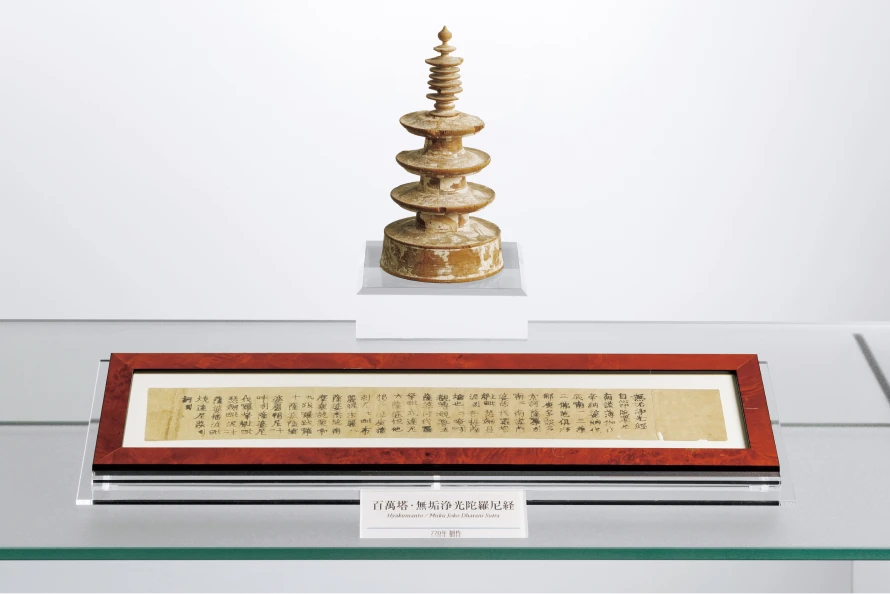
Miniature Stupa and Viśuddhaprabhā Dhāraṇī Sutra (Original)
This is the oldest mass-produced printed work for which the exact year is known. At the command of Empress Shotoku, the 48th ruler of Japan, one million miniature stupas were carved from cypress and cherry wood to pray for the souls of those who died in the Emi Rebellion in 764. These stupas housed one million printed sutras, of four types. They were completed in 770, and 100,000 each were donated to the Ten Great Temples of Nara and elsewhere, including the temples of Todaiji, Horyuji, Kofukuji, and Yakushiji.
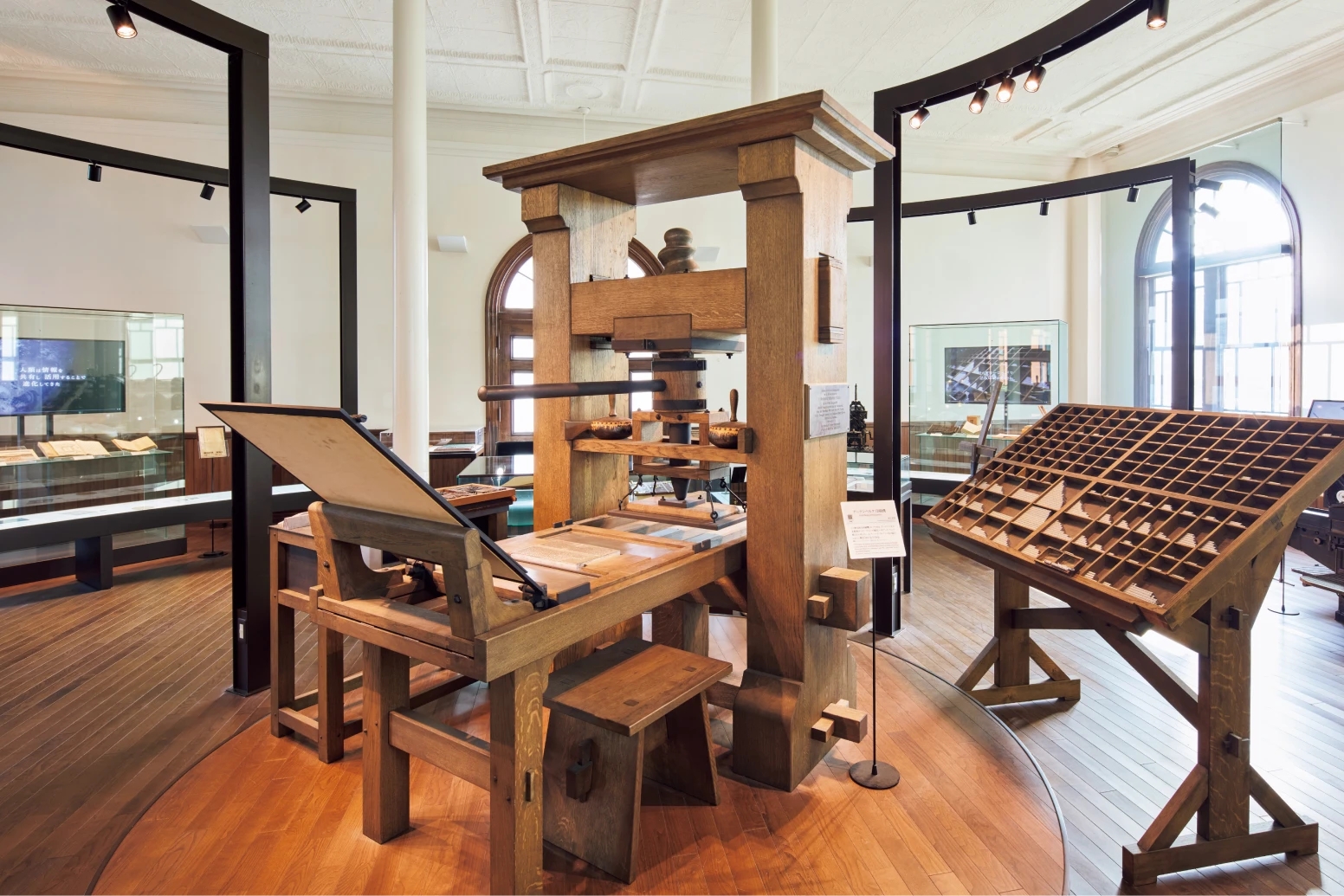
Gutenberg Printing Press (Reproduction)
In 1445, the German goldsmith Johannes Gutenberg created the first metal type cast from a lead-based metal alloy. Later, in 1455, a grape press for making wine inspired him to invent his hand-powered printing press. At the same time, he also invented oil-based ink. The invention of these printing systems has led Gutenberg to be called the father of modern printing. Printing press itself has been called one of the Three Great Inventions of the Renaissance, along with gunpowder and the compass.
While Gutenberg’s original printing press no longer exists, this exhibit was made by a German carpentry workshop, Schreinerei Lacher to the same specifications as the printing press displayed at the Gutenberg Museum and under the supervision of that Museum’s director.
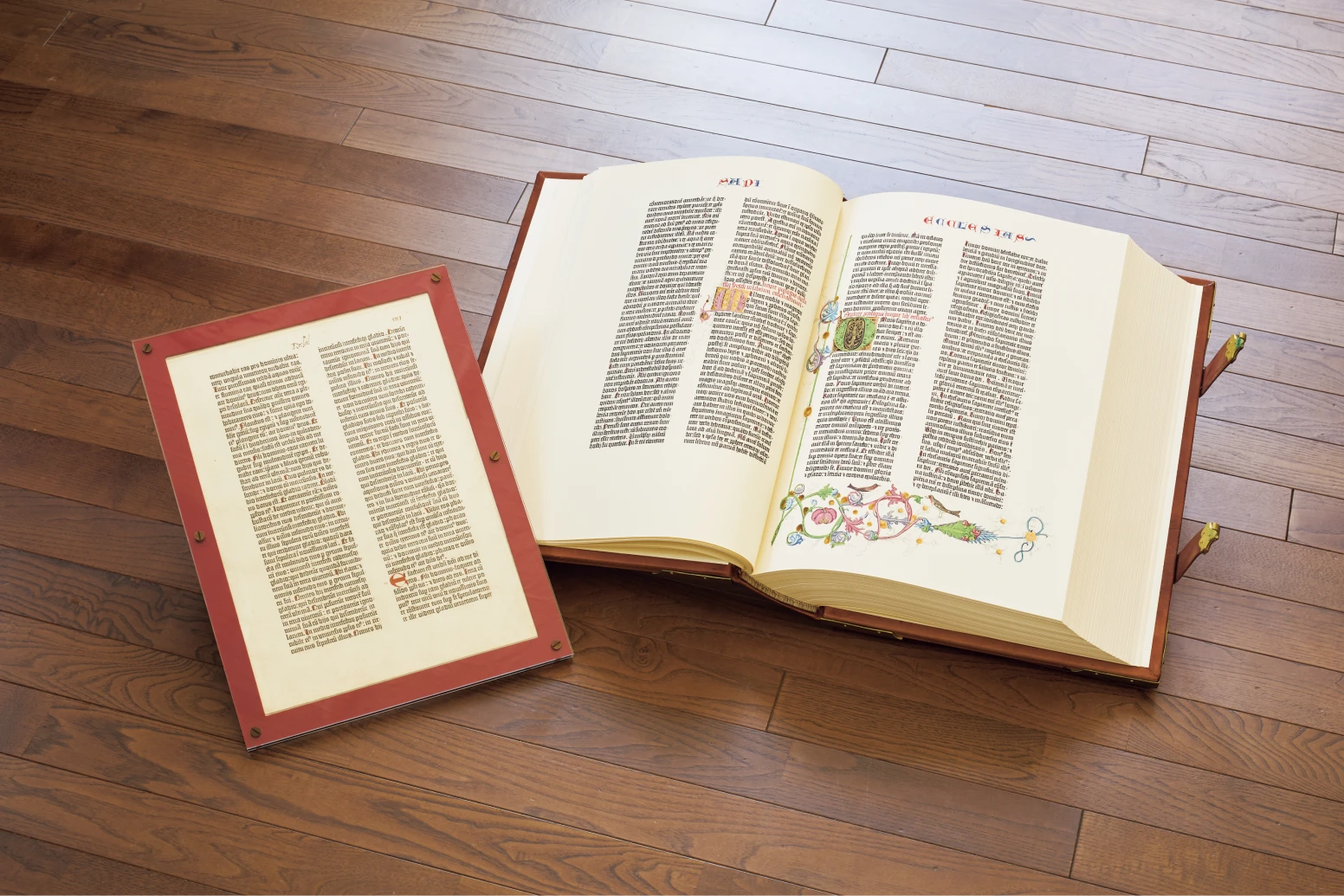
42-Line Bible (Facsimile Edition) and Fragment (Original)
In the 15th century, 180 copies of the “42-Line Bible” were printed on the Gutenberg printing press. Today, only 48 copies, including incomplete ones, remain worldwide, mostly in Europe. This exhibit is a facsimile edition in two volumes specially created to be as close a reproduction as possible, printed using collotype of between 4 and 12 colors.
The exhibited authentic fragment corresponds to leaf 121 of the second volume.
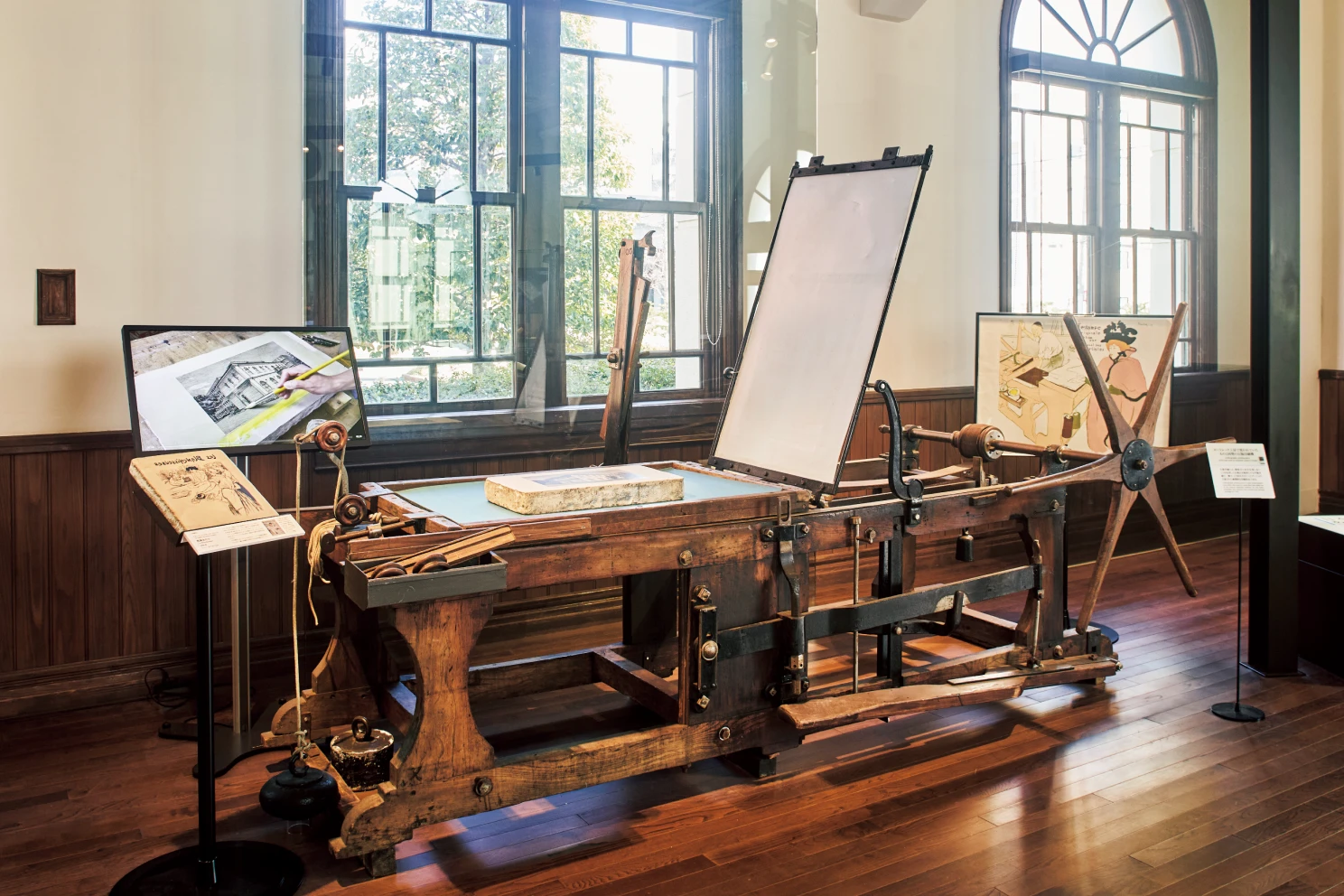
Senefelder Lithographic Printing Press (Original)
In 1798, the German Alois Senefelder developed the technology for lithographic printing. Senefelder discovered that oil-based ink would adhere to the drawn areas of an image drawn with an oil crayon on limestone (which is largely calcium carbonate) from Bavaria in Germany, which was then coated with a nitric acid and gum arabic solution. This is said to be the starting point for today’s planographic (offset) printing. Many artists, such as Toulouse Lautrec, used this lithograph printing press to produce works at the time.
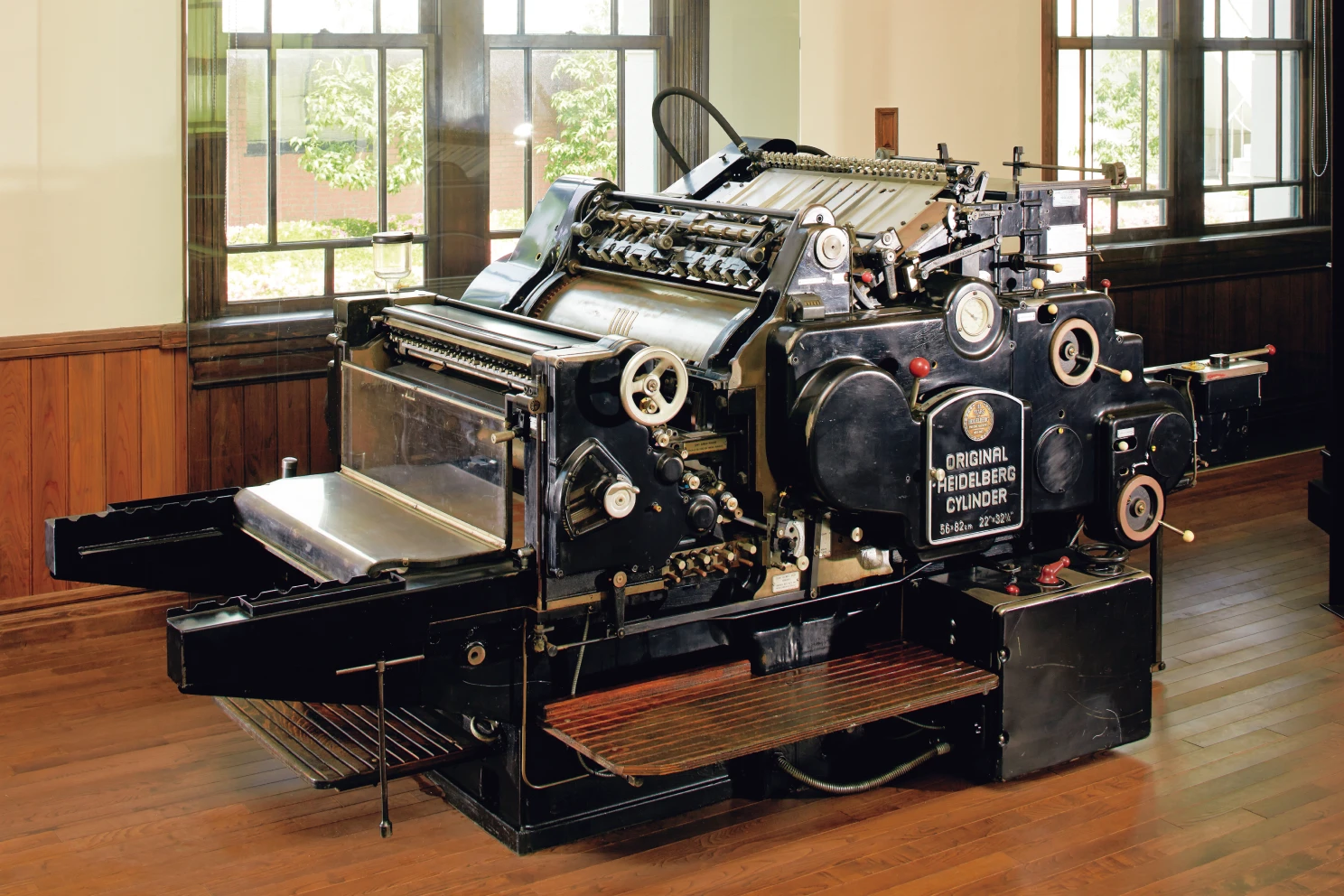
Heidelberg Letterpress Printing Machine (Original)
In 1927, the first platen printing machine from the German company Heidelberg arrived in Japan. As a large-quantity printing machine with automatic paper feeding, it contributed greatly to the development of the printing industry in Japan. From the late 1950s, many of these large letterpress printing machines were brought in, gaining great popularity as all-round machines that could handle anything from simple jobs to full-color printing. The machine on display here was used for 545×788 mm size paper, and was installed in 1968. It offered the highest level of quality and what was an unprecedented speed for the time of up to 4,600 sheets per hour. Around 40 of these machines were installed at the factory on these grounds and they were used to print Kokuho (National Treasures) , Genshoku Nihon no Bijutsu (Art of Japan in True Color), and other publications.
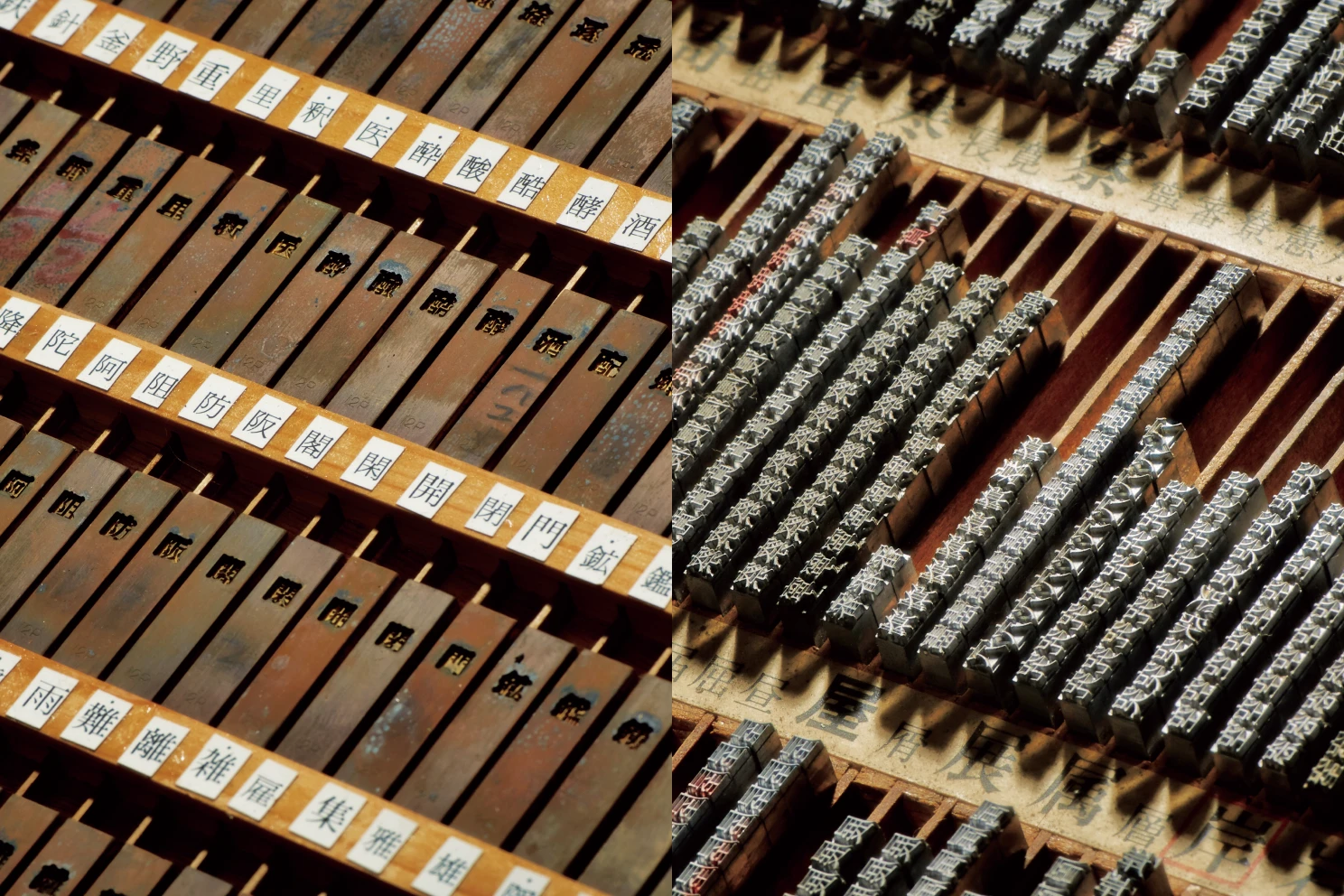
Matrices, Lead Printing Type, and Type Casting Machine (Originals)
These items are matrices and lead type that were in actual use until around 1985, as well as a type casting machine for making any missing type. A base metal alloy with a ratio of 80% lead, 17% antimony, and 3% tin, the same as Gutenberg came up with, was melted in the type casting machinery forge, then poured into molds (matrices) to create type.
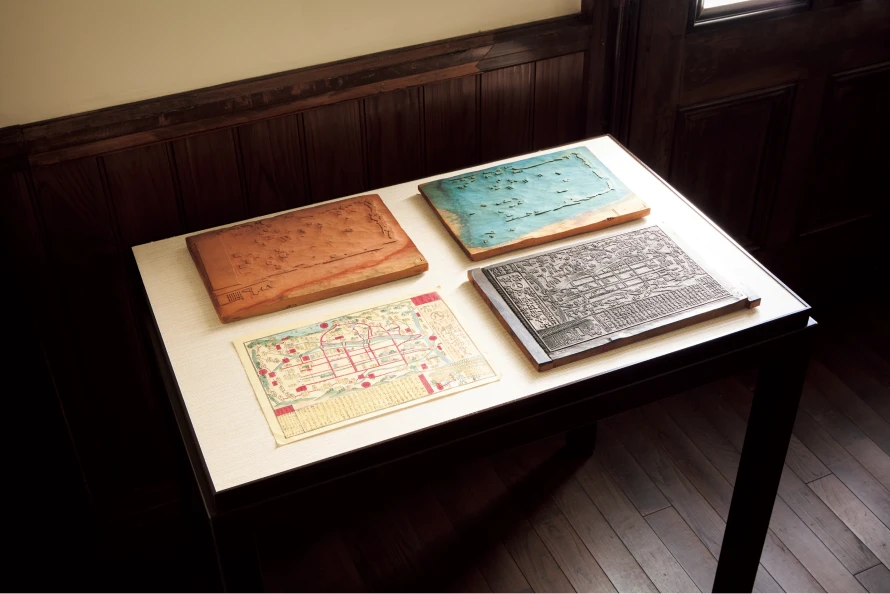
Simple Route Guide to the Famous Sites of the Kyoto (Original)
This is a map of famous sites of Kyoto during the early Meiji period (late 1860s to early 1880s). It was printed using woodblocks in six colors for the text and illustrations on both sides of three woodblocks. The printer could replace the inn name and location to suit the client.
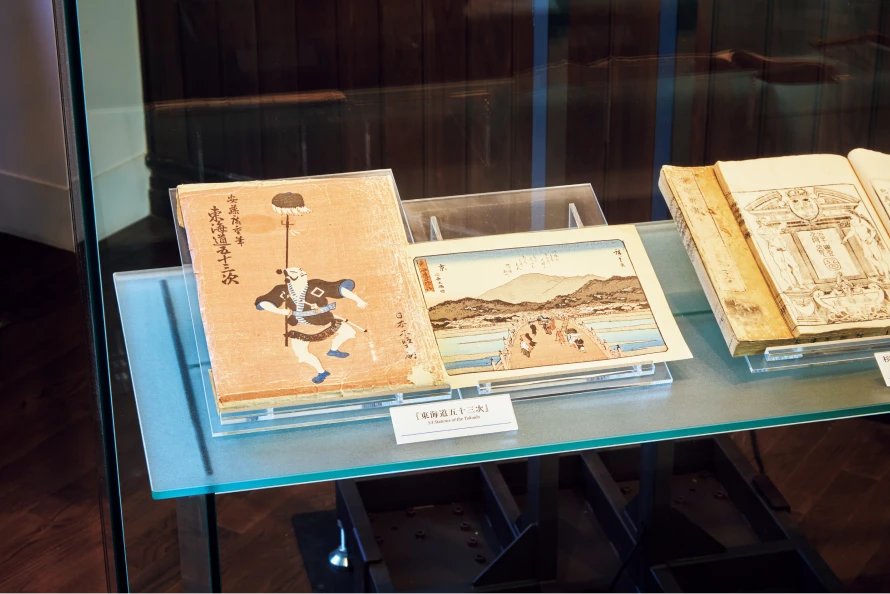
The Fifty-Three Stations of the Tokaido (Facsimile)
Utagawa Hiroshige, Japanese Ukiyo-e artist, traveled the Tokaido Highway from Edo to Kyoto as a member of an official delegation delivering horses to the emperor. During the trip, he made numerous sketches of the landscapes, especially the 53 post-station towns. The Fifty-Three Stations of the Tokaido is a woodblock print series based on these sketches. This exhibit is a faithful reproduction of the original.
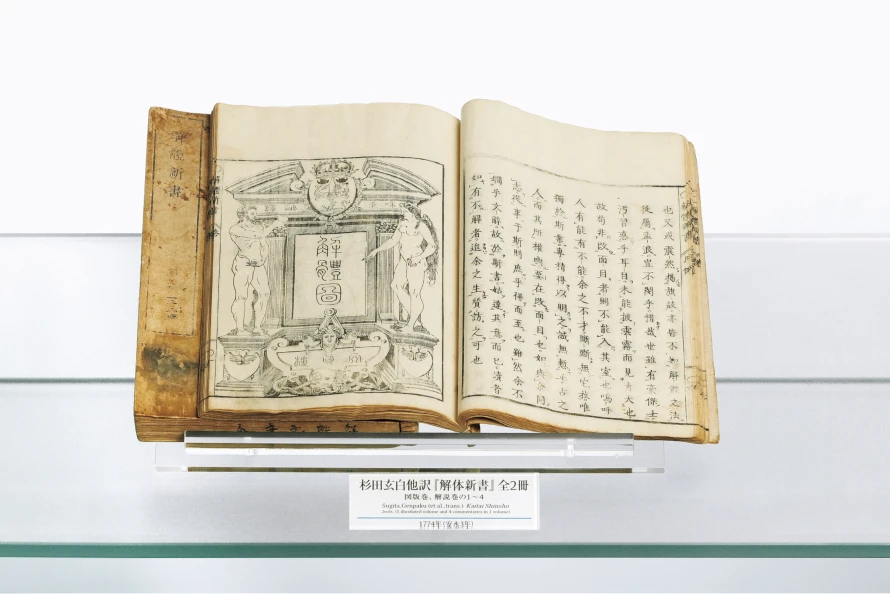
Kaitai Shinsho (New Text on Anatomy), translated by Sugita Genpaku, et al. (Original)
Kaitai Shinsho, published in 1774, is a set of five woodblock-printed books consisting of the introduction and illustrations, and four main volumes. The original Dutch work by Johann Kulmus was translated into Japanese by Sugita Genpaku, Maeno Ryotaku, Nakagawa Jun’an, and others. Odano Naotake copied the fine, precise anatomical drawings and frontispiece. It was a popular book that went through numerous revisions. The book on display is a first edition example.
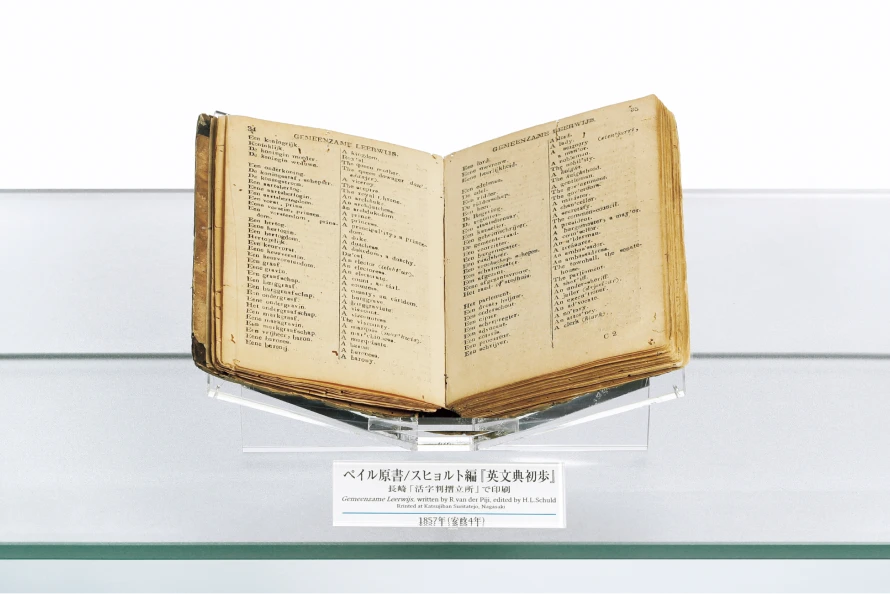
Eibunten Shoho (Gemeenzame Leerwijs), Nagasaki Edition (Original)
Seven types of books were printed over four years using a Dutch printing press at the Katsujiban Suritatejo (Typography Center), set up in the Nagasaki Magistrate’s Office in 1856. The book exhibited here was the fourth to be printed on that press, titled Gemeenzame Leerwijs, edited by Van der Pijl and Schuld. It has Dutch words on the left of each page and English words on the right. It is believed that Motogi Shozo, called the father of printing in Japan, was involved with this project. It marked the beginning of full-scale printing using movable type in Japan.
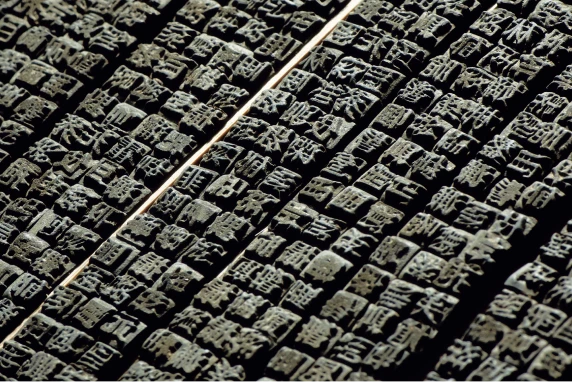
Wood Type (Originals)
In 1314, during China’s Yuan Dynasty, a man called Wang Zhen carved hardwood to create 30,000 characters. However, the complexity of selecting characters and the wear on the type meant that wood type did not find widespread use.
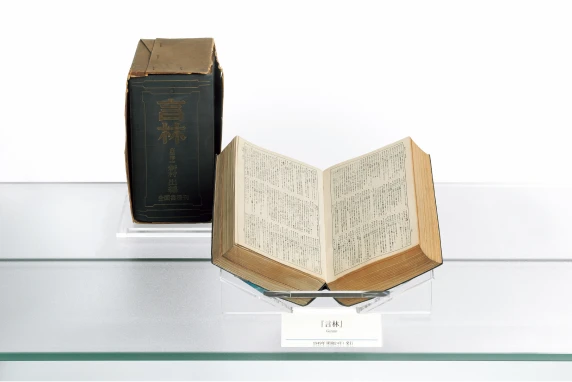
Genrin
Published in 1949, this was the first full-scale post-war Japanese dictionary using modern kana (phonetic Japanese script). It was a huge publication with over 2,300 letterpress printed pages. It attracted much attention as soon as it went on sale, and went through multiple reprints.
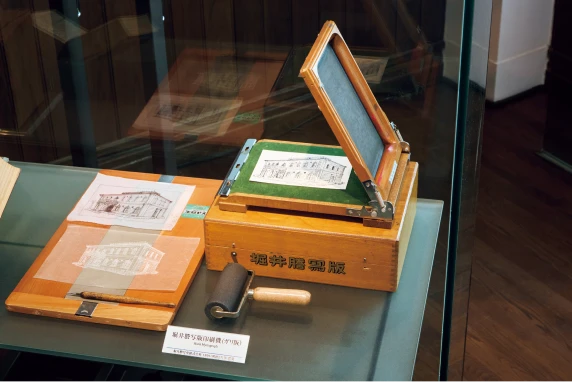
Mimeograph (Original)
The prototype mimeograph invented by Thomas Edison was improved by Horii Shinjiro in 1894, and given the name “toshaban” or “gariban.” This exhibit is a small model that was used in the very earliest years.
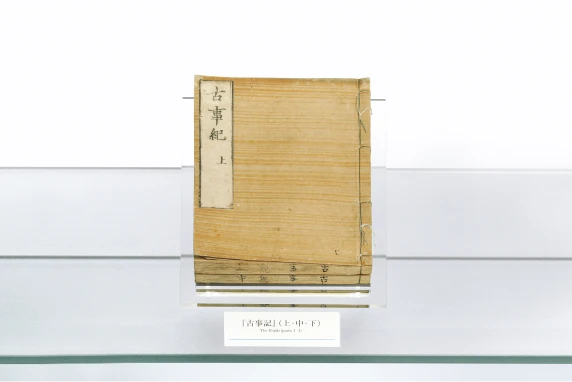
Kojiki in Three Volumes (Facsimile)
Kojiki is Japan’s oldest book, recording the country’s history, including the mythology around the emperors -traditions that had previously been passed down only orally. Those stories were collected in three volumes written by O-no-Yasumaro in 712. This exhibit is a faithful reproduction using washi paper very similar to the original, and bound Japanese-style in three volumes.
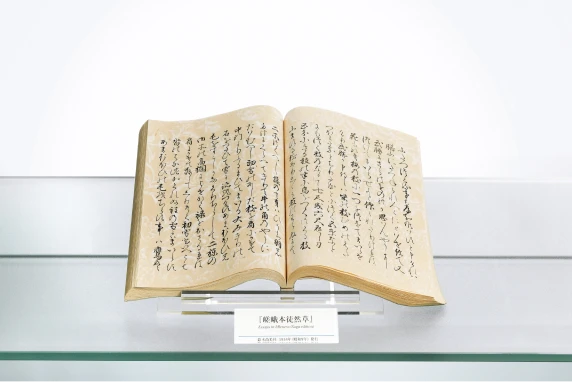
Sagabon Tsurezuregusa (Facsimile)
Sagabon (Saga editions) were privately printed in the early Edo period (early 17th century) using movable wooden type by the Suminokura family, wealthy merchants from Saga, Kyoto, with the help of people like Hon'ami Koetsu. This exhibit is a facsimile from 1934.
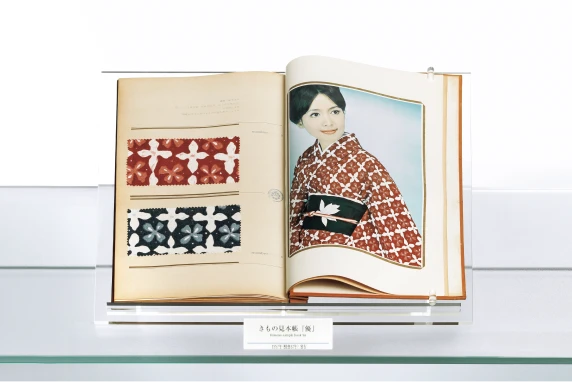
Yuzen Kimono Sample Book (Original)
Kimono (Japanese traditional clothing) sample books were published annually during mid-Showa period (circa 1950s). They involved a great amount of work, starting with the photographing of the models. There were strict requirements for coloring that matched that of the original fabric samples. This exhibit was produced in 1957.
Second Exhibition Room
(Architectual Salvage Materials form the Meiji-period)
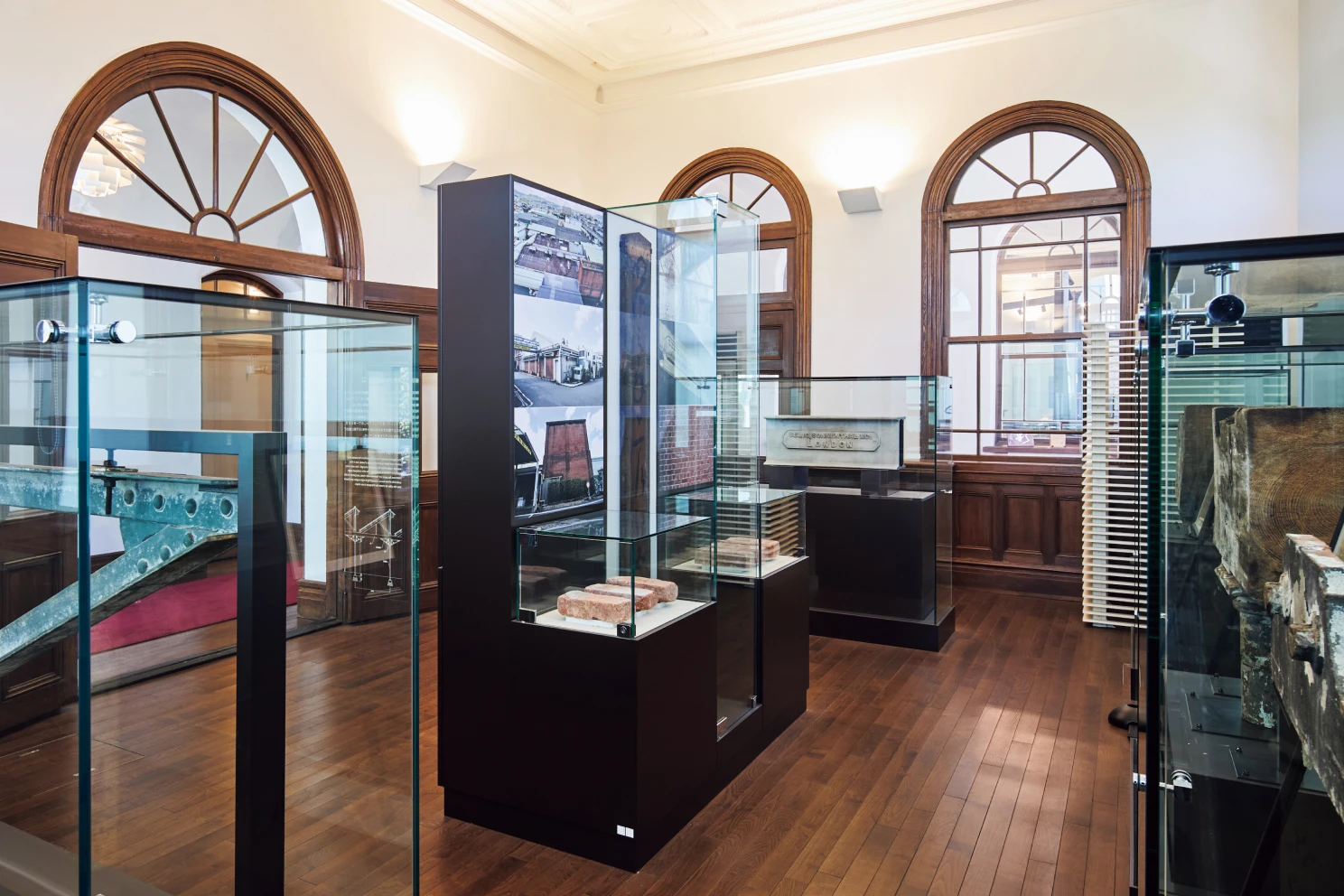
This exhibits some of the structures that were demolished during Nissha’s building renovations. They are a valuable architectual salvage materials form the Meiji-period (1868-1912).
Third Exhibition Room (Typewriters and Pencil Sharpeners, etc.)
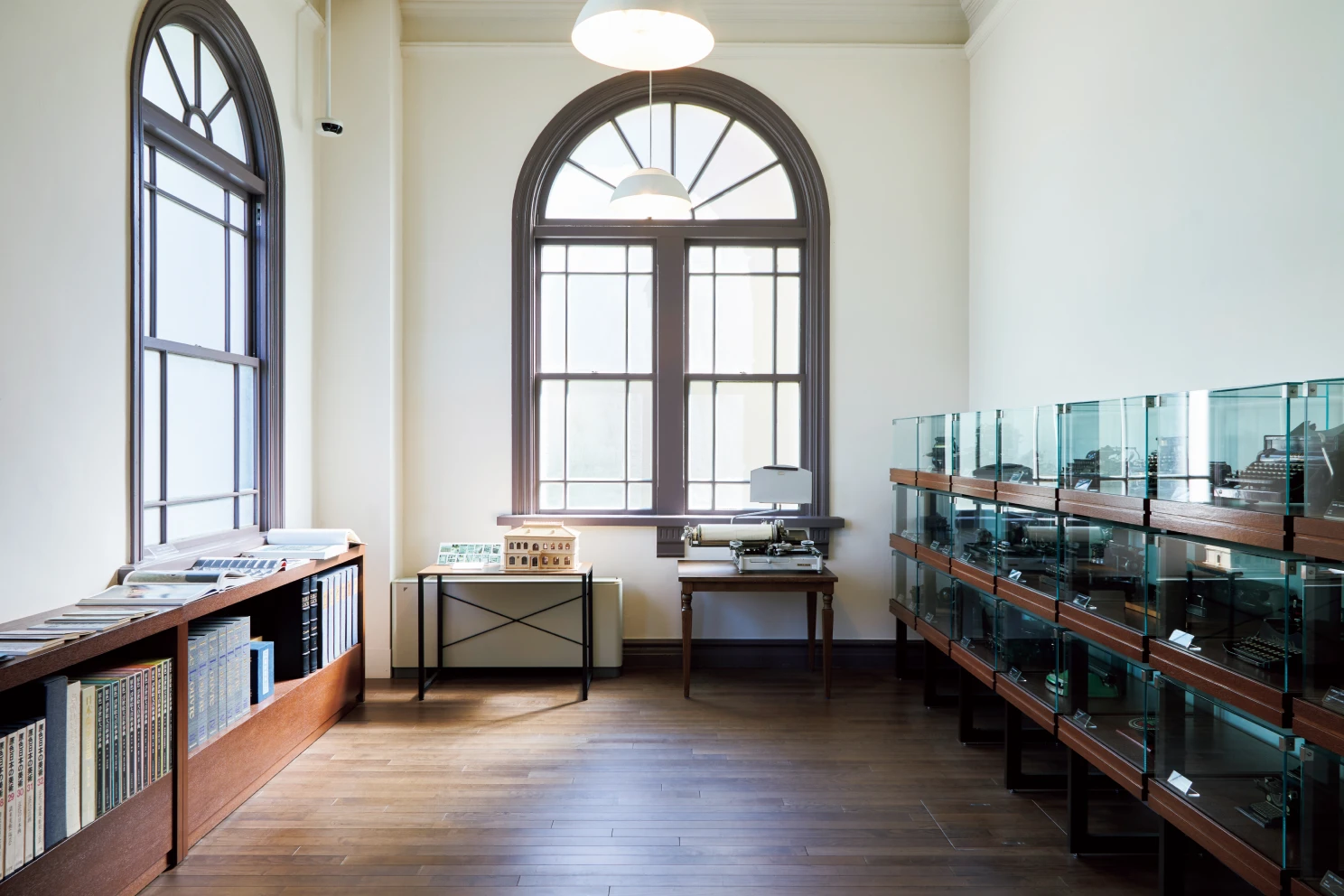
This displays a collection of pencil sharpeners and Western typewriters in a range of shapes. Visitors can also read Kokuho (National Treasures, 1962) and Genshoku Nihon no Bijutsu (Art of Japan in True Color, 1966), both printed by Nissha, along with other valuable books on art that demonstrate the height of printing technology at that time.